
Gray Jays: the infamous “robbers” of food from campers and picnics. In late October, I enjoyed observing them gather fat from an elk carcass and caching it. Caching is when an animal hides food for later use, like a squirrel hiding a stash of nuts and seeds. The difference between the squirrel’s way of caching and what Gray Jays do, is fats and meats can perish in hot weather. I believe, as Montana experiences later and shorter winters, the Gray Jay’s technique of storing food will not turn out so well for them, impacting their reproduction and needs for survival.
Recently, my family and I travelled to the middle fork of Rock Creek for our annual elk hunting trip. We shot a cow on our last day before heading back to Missoula. Papa came and got us so we could help butcher the elk. Before I could see the elk, I saw the silvery feathers of a Gray Jay. There was a pair of Gray Jays fluttering around her and diving down to pick up fat with their beak. The bouncy ball sized pieces of fat they were carrying made me wonder how the jay could carry such a big thing. A study done by Lynn Rogers found jays normally carry food with their beaks unless the load is greater than 40% of their body weight. On the occasion they do carry items larger than 40%, the Gray Jay will transfer the load to their feet or drop it. So the pieces of fat being cached by the Gray Jays had to be less than that amount or they wouldn’t be carrying it with their beak. I noticed the Gray Jays were fearless, swooping in to grab pieces of fat mere feet from us. I took a piece and hung it on a nearby tree, standing a foot away with Mom’s phone. Finally one showed up and stood there trying to get the fat off the stick. I took pictures for 15 minutes before I came over to help butcher the elk. They were still caching fat when we left.
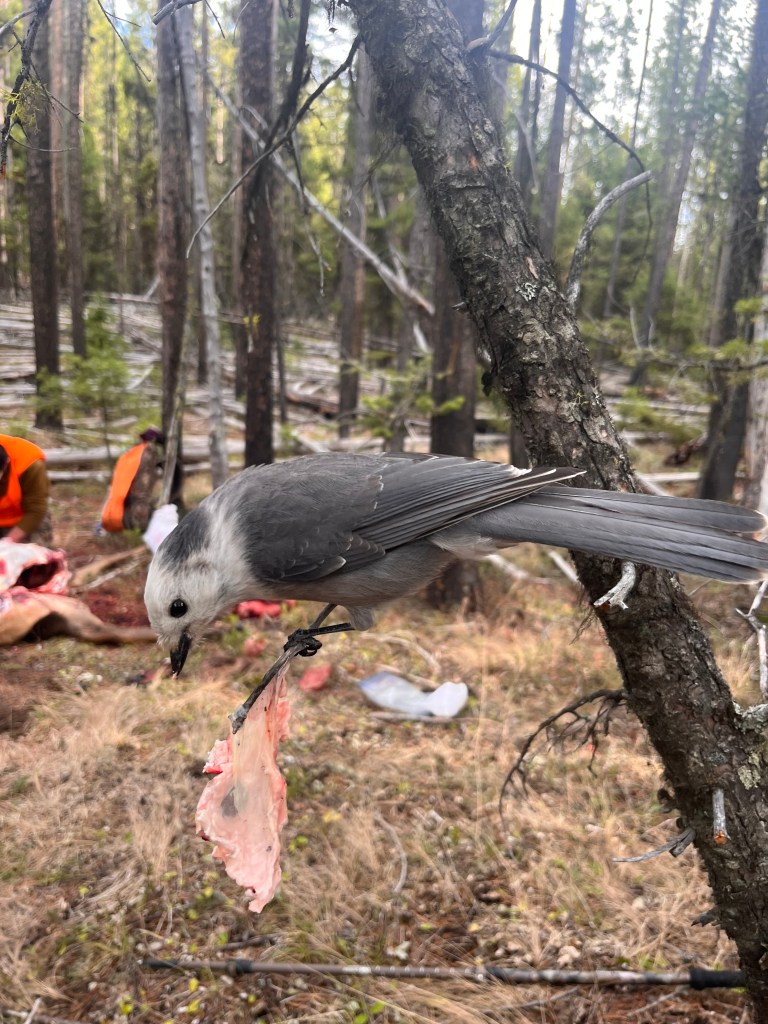
The Gray Jay, whose scientific name literally means “the Canadian who stores food”, nests in early spring and relies on caches to feed its young. When their caches freeze and thaw quickly, the meat or fat is damaged and loses its nutritional value. Researchers found when the jays feed damaged meat or fat to themselves and the jay babies, they grow weak and many chicks don’t survive. Since very little food is available for them to eat in early spring, you can imagine how much Gray Jays depend on these caches so they can survive and successfully reproduce. As the Earth warms, freezer-burn could become more and more common in caches, resulting in increased deaths. If the caches start failing, the jays will have their work cut out for them. Global warming is not the only enemy of their caches, Steller’s Jays and other birds steal Gray Jay caches. On a happier note, about 80% of caches are recovered by the Gray Jay who cached them.

It turns out there is more to these little camp thieves than meets the eye and they have their problems just like us. Imagine having to defend your fridge and your kids and somehow stay alive! So if you happen to take a hike in the northern United States, look around and you might see one of these little jays storing food in preparation for winter.
 Missoula Bird Nerds
Love gray jays. I have a hard time calling them Canadian since they are everywhere . Excellent research and photos my niece!! This Auntie is not much of a hunter but sure impressed with that 200 yard shot. MeRRy HaPPy everything through December and into the New Year. Sending lots of love.
LikeLike
Hi Auntie Bev! Thanks for the compliments. ‘Canada Jay’ is the name many sources use, but I agree with you and call them Gray Jays.
Love,
Dottie
LikeLike
Thanks for sharing this information about gray jays! I didn’t realize how important their cache is for their survival! I want to be sure to leave some extra treats for them in the spring time for their babies! Love you and hope you are enjoying this holiday season!!
LikeLike
Hi Nana! I am so glad you liked the info, and I miss you so much. I hope your holidays are happy and your Christmas is merry
Love,
Dottie
LikeLike