Part one: The Bonaparte’s Gull

A few weeks ago, my family and I were driving back from Moose Lake and bird names were the topic of our conversation. A Clark’s Nutcracker flew over the truck and we started talking about who Lewis and Clark were, their impact in American history, and the birds and places named after them. We also discussed that birds didn’t need to be given peoples names, they already had names and some people they were named after weren’t too nice. It is amazing that people in the American Ornithological Society (AOS) were thinking the same thing. On November 1st, 2023 the AOS announced they would change all English bird names that were of specific people. I support this plan because when a bird is named after a person the name does not tell us about the bird. Take the Steller’s Jay for example, the name doesn’t tell us anything, whereas the Pinyon Jay’s name tells us the habitat it lives in.
I am writing this blog because, when researching birds that would have their names changed, I came upon three totally different birds that are tied together with their name origins. So I begin with the bird that started it all…
Bonaparte’s Gull
Chroicocephalus philadelphia
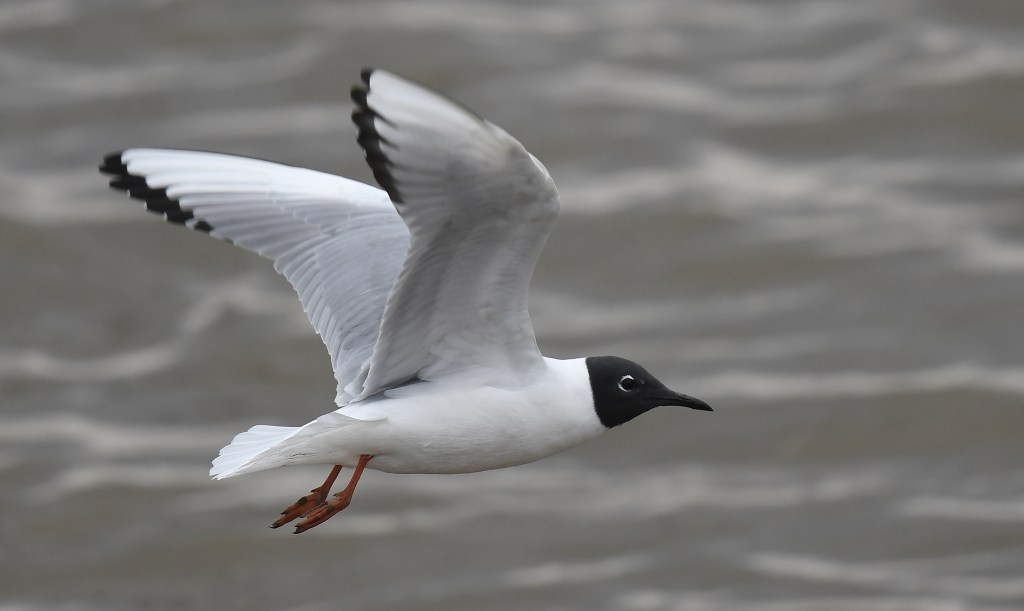
About the Bonaparte’s Gull
The Bonaparte’s Gull is the smallest commonly-seen gull in the U.S. and Canada. It can be distinguished from other species by its black bill and head, as well as the white crescents around the eyes. The gull is similar to the Laughing, Little, Franklin’s, Sabine’s, and Black-headed Gull. It is the only gull species that regularly nests in trees. During a Bonaparte’s Gull breeding season, it will feed off of insects that are caught while flying. I have never seen one but it is possible to find one in Montana. While researching the gull, I listened to their calls which remind me of some frogs that we heard while camping in Oregon. The recording also sounded like a flock of Starlings.
Charles Lucien Bonaparte
Charles Lucien Bonaparte was a French naturalist and ornithologist. He lived from May 24th, 1803 – July 29th, 1857 and had twelve children. Bonaparte had the Bonaparte’s Gull, Nightjar, and Parakeet named after him. The Bonaparte’s Gull was named after Bonaparte because he made important contributions to American ornithology in the 1820s. He also named the Zenaida genus of doves after his wife and the Say’s Phoebe after Thomas Say.
What Would You Name This Bird?
If you could, what would you name the Bonaparte’s Gull? Would you name it after its habitat, calls, plumage, or habits? If you would like to share, please put in the comments. Make sure that the name you choose has not been used for another bird. Similar looking species are mentioned in the About section. If it were up to me, I would call it the Starling Gull because its call sounds a lot like a very talkative Starling or a Frog Gull because a flock of them sound like frogs.
Resources
- Bonaparte’s Gull and Charles Lucien Bonaparte on the Wikipedia website.
- The Cornell Lab of Ornithology’s Bonaparte’s Gull.
 Missoula Bird Nerds
I love seeing the Bonaparte gull. Not too many sightings here on the Kuskokwim compared to the mew gull and the glaucous gull. I saw that story too and wonder now what would I call this lovely gull. Ill get back to you.
LikeLike