Their Problems, Their World
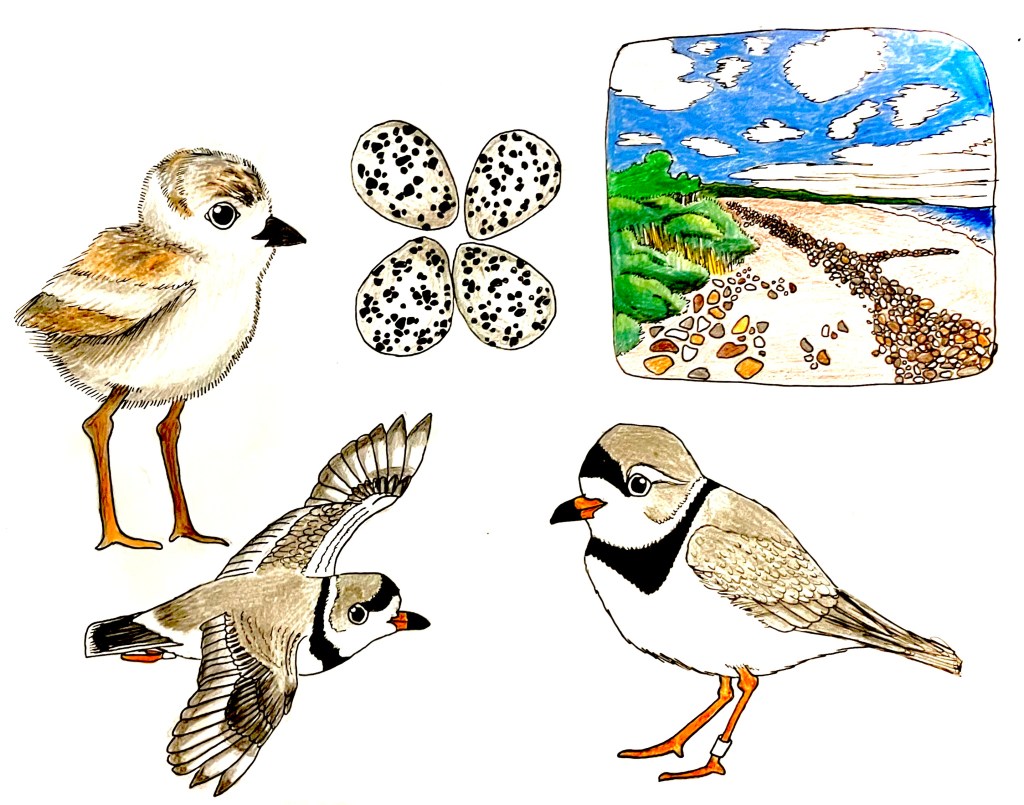
Just smaller than your average Ticonderoga pencil, and weighing as much as a tennis ball, the Piping Plover forages sandy shores atop orange legs, snatching up small invertebrates with their stubby, black and orange beak. I am lucky enough to have seen one hunkered down on Sandy Hook, a peninsula jutting into the bay across from New York City.
We are about to turn around when Papa strikes up a conversation with a photographer, who saw the Piping Plover a few minutes ago as it foraged near the waves. Grandmom and I walk the beach, winding through the debris washed up during high tide, while Papa and Lucy make a beeline to the section of beach the photographer pointed to. Soon after we begin our search, Papa halts and trains his binos on a light brown lump nestled between rocks and shells. The lump moves and a tiny orange and black beak peeks out. The Piping Plover blinks its dark eyes before settling its beak back into its feathers. It is so cute!! I walk around to its other side, where I can see New York beyond the waves. In reality, the Piping Plover is dwarfed by the skyscrapers, but at such a distance the little sandpiper appears to be a giant. The plover stands up on short, spindly legs and takes a couple steps before settling down again.
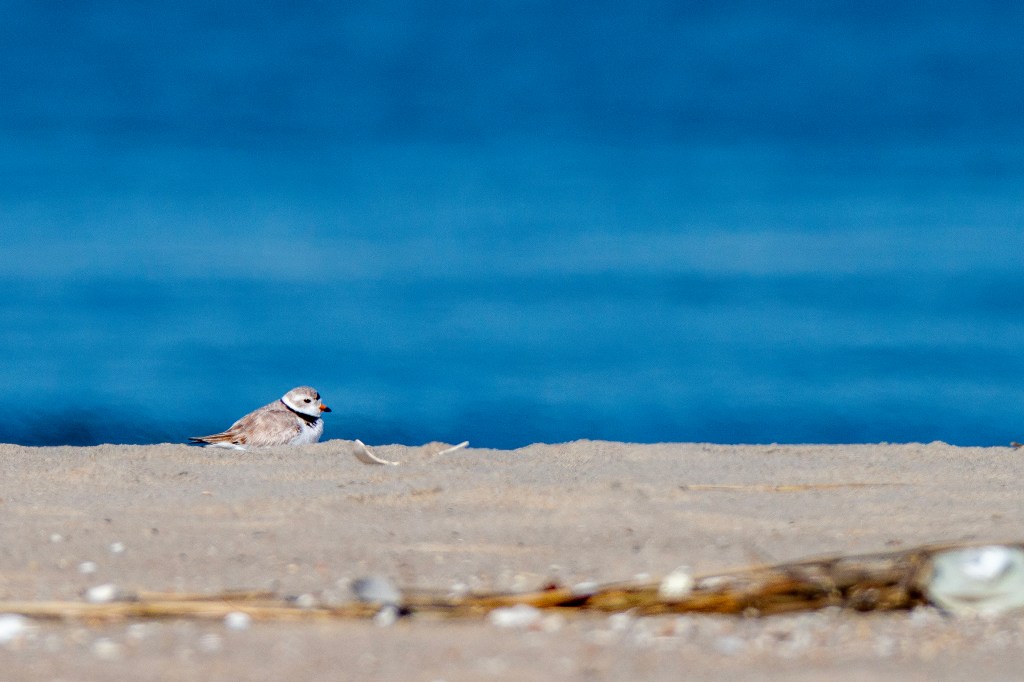
The north point of Sandy Hook was once fenced off to public access, but when the number of plovers there dropped to one, the beach was reopened to the public. Now, nesting at Sandy Hook is even riskier than before.
Each year, adults lay 2-4 camouflaged eggs in a shallow depression dug into a sandy bank. The chicks are precocial, so they are up and out of the nest soon after hatching. They spend the summer learning to hunt and survive under their parent’s watchful eyes. Piping Plovers winter on the southern Atlantic coast, where last year’s chicks molt into breeding plumage and prepare for their migration north.
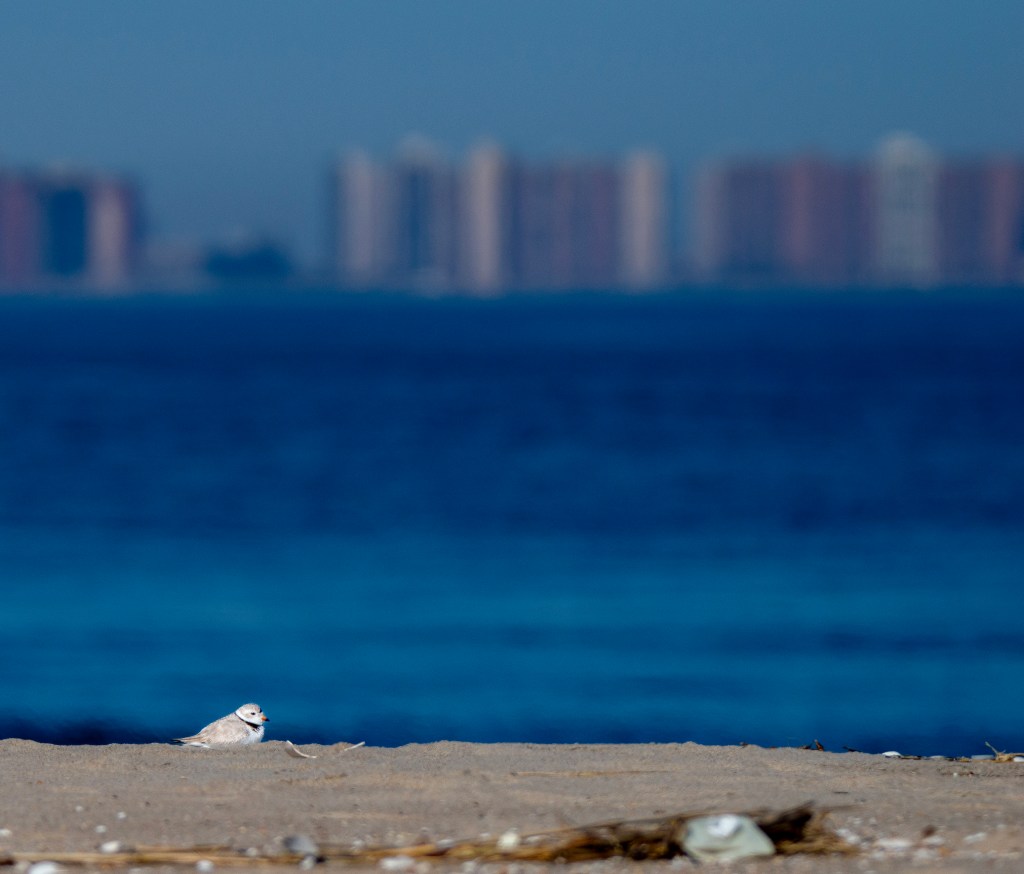
An increase in predation and in urbanization are the two main threats to Piping Plovers. Because they are so small, the Piping Plover is eaten by many animals, from crows and gulls to dogs and foxes – all of which thrive in urban areas. When dogs are permitted to run off-leash, nesting plovers attempt to lure them away from the nest. An unguarded nest is an easy meal for airborne predators. People are also a threat to plover nests. Since nesting in dunes is risky (limited visibility and an increased exposure to predators), Piping Plovers evolved to nest in the debris just above the high tide line – exactly where people love to walk. Human encroachment onto Piping Plover nesting areas is problematic for two reasons: One, people leave trash that attracts gulls and crows, both of which find Piping Plover eggs and chicks delicious; Two, when people start moving onto a coast, that beach gets developed, destroying Piping Plover habitat. Recognizing the peril of these little plovers, conservation groups across the country are helping plovers return, resulting in over eight thousand individuals today.
If you find yourself walking on a Piping Plover’s beach this summer, be sure to keep your eyes peeled for a ball of fluff – you may see one of the cutest birds in the world.
 Missoula Bird Nerds